When I first started crocheting, my biggest confusion wasn’t how to crochet — it was what to buy.
What size hook should I use? Why does everyone recommend something different? And how do I know if I already bought the wrong one?
I spent way too much time reading charts, watching videos, and second-guessing myself. The advice was everywhere, but it rarely answered the question I was actually asking. What I really needed to know was simple: what am I trying to make?
Most guides talk about “beginner hooks” as if all beginners are the same. But the truth is, the right hook depends less on skill level and much more on the kind of projects you want to work on.
This isn’t a list of perfect rules or a universal standard. It’s just the path I took — the hooks I tried, the ones that frustrated me, and the ones that finally made crochet feel doable. I mostly crochet small items, amigurumi, and detailed pieces, so my choices naturally grew from that. And if you’re starting in a similar place, I hope this makes your first steps feel a little less overwhelming.
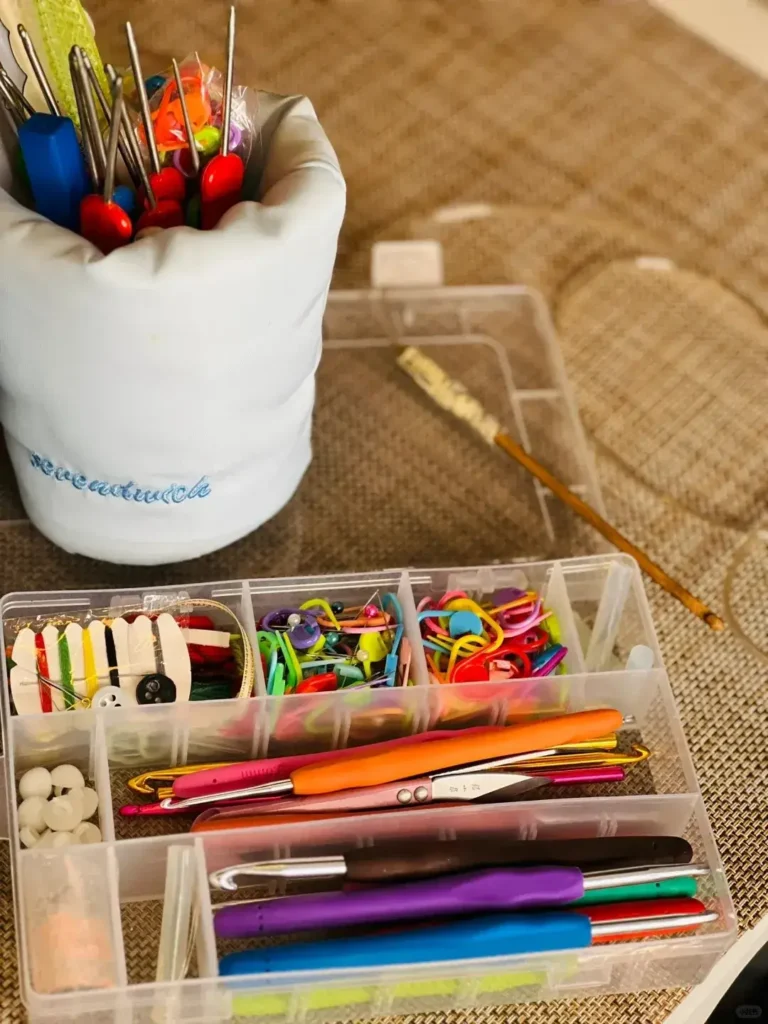
Start With What You Want to Make
When you’re new to crochet, it’s easy to assume that hook size is tied to skill level — like smaller hooks are “advanced” and bigger hooks are “beginner-friendly.” I definitely thought that at first.
But hook size isn’t really about how good you are. It’s about what you want to make. The size of your hook affects the scale, density, and feel of your finished piece far more than it reflects experience.
Some beginners dream of scarves, hats, and blankets. Others are drawn to coasters, keychains, bows, or small amigurumi. Both are completely valid starting points — they just call for very different tools.
I started with small projects because finishing something quickly kept me motivated. If that sounds like you too, the next part will probably feel very familiar.
Hook Size by Yarn Ply — What Actually Worked for Me
This is the part I wish someone had shown me early on — not a chart full of rules, but a simple breakdown of what actually worked in my hands. I also learned later that yarn choice mattered just as much as hook size.
I didn’t arrive at these pairings by being precise or “correct.” I arrived at them by finishing projects, getting frustrated, switching things up, and noticing what felt manageable.
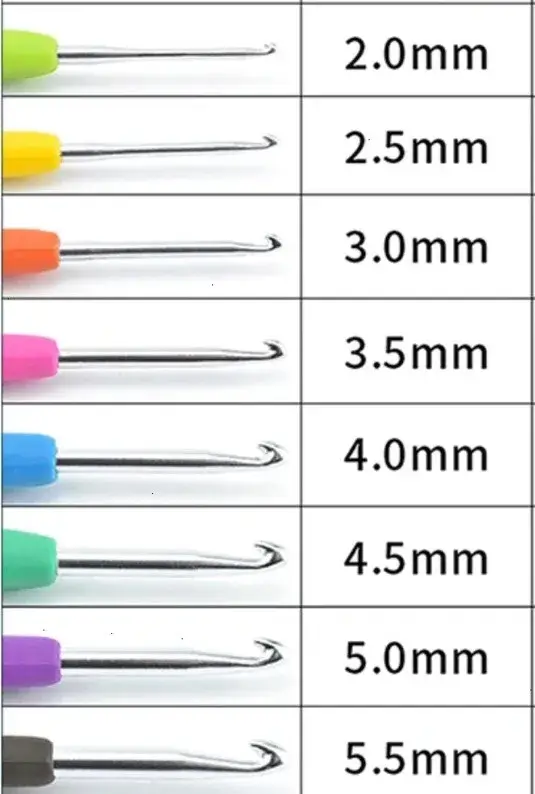
4-ply Yarn → 2.0 mm Hook
What I used this for:
- Hair clips
- Small flowers
- Charms and keychains
- Fine amigurumi details
How it felt:
The finished pieces are small and delicate, which can be really satisfying. But this combo does require patience — everything happens at a smaller scale, similar to the kind of control you need for basic stitches.
I wouldn’t call it hard, but I would call it demanding on focus. Great if you enjoy precision.
5-ply Yarn → 3.0 mm Hook
What I used this for:
- Coasters
- Pet bandanas
- Small pouches or storage bags
With the same stitch pattern, pieces come out slightly larger than 4-ply, but still very easy to control.
👉 Personal note:
This is one of my most-used combinations, and one I often recommend to beginners who want to make small, finished items without feeling overwhelmed. It’s forgiving, visible, and still neat.
8-ply Yarn → 4.0–5.0 mm Hook
What it works well for:
- Scarves
- Hats
- Backpacks
What changes here:
The fabric gets thicker and sturdier, and projects feel more substantial. The trade-off is time — these pieces usually take longer to finish, which can test patience if you’re brand new.
Mixed or Chunky Yarn → 5.0–9.0 mm Hook
Common uses:
- Hats
- Bags
- Statement pieces
These yarns tend to create bold, textured results that feel very personal and expressive. That said, this isn’t the direction I focus on most for beginners on this site — especially if your goal is small, detailed projects with quick wins.
None of these combinations are rules. They’re just the ones that helped me understand my stitches, enjoy the process, and actually finish what I started.
Why I Recommend Starting With Small Projects
For beginners, the hardest part of crochet isn’t learning the stitches — it’s sticking with it. Starting with a large project can feel exciting at first, but when progress is slow and the finish line feels far away, motivation fades quickly.
Small projects work differently. You can see results in an hour or two. You can hold a finished piece in your hands the same day you started. That kind of instant feedback is incredibly encouraging, especially when everything is still new.
For me, it takes one to two hours just to finish a small bow. And that’s perfect. I get to practice, make mistakes, fix them, and still end the session feeling accomplished. If I had started with a large project, I honestly don’t think I would’ve lasted.
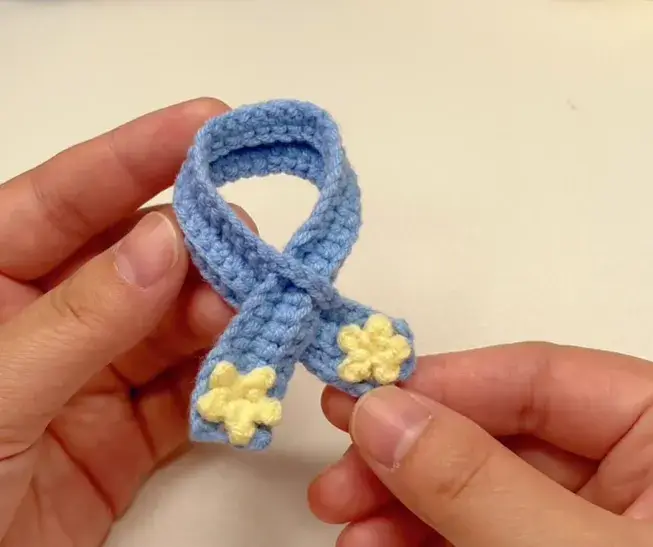
That’s the real reason I often recommend smaller hooks like 2.0 or 3.0 mm — not because they’re more “advanced,” but because they pair naturally with small, finishable projects that make crochet feel sustainable rather than overwhelming.
Crochet Hook Material — What Felt Best in My Hands
I didn’t think hook material would matter much when I first started. A hook was a hook… right?
It turned out my hands definitely had opinions.
Why I Prefer Wooden Handles
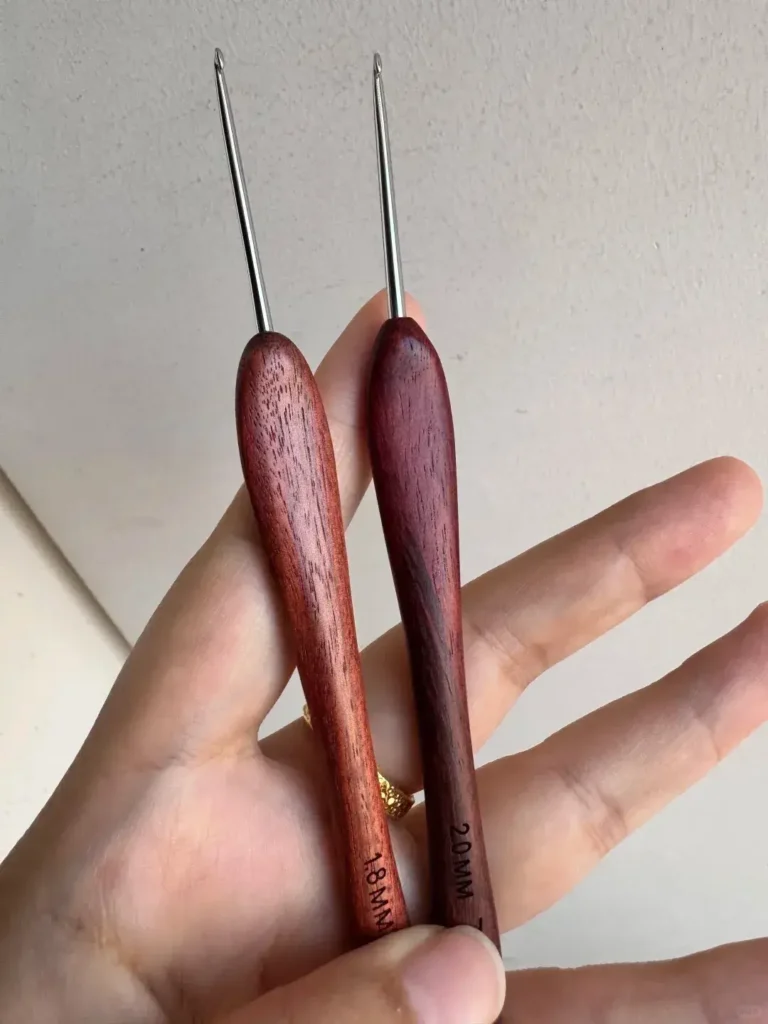
Over time, I found myself reaching for hooks with wooden handles more often. They felt steadier in my grip, especially during longer sessions. The slight friction of the wood made the hook less slippery, which helped me feel more in control.
They’re also lighter, and that made a difference. My hands felt less tired, even after working for a while.
That said, this is just what worked for me — hands are personal, and comfort really does vary from person to person.
Plastic / Resin Hooks
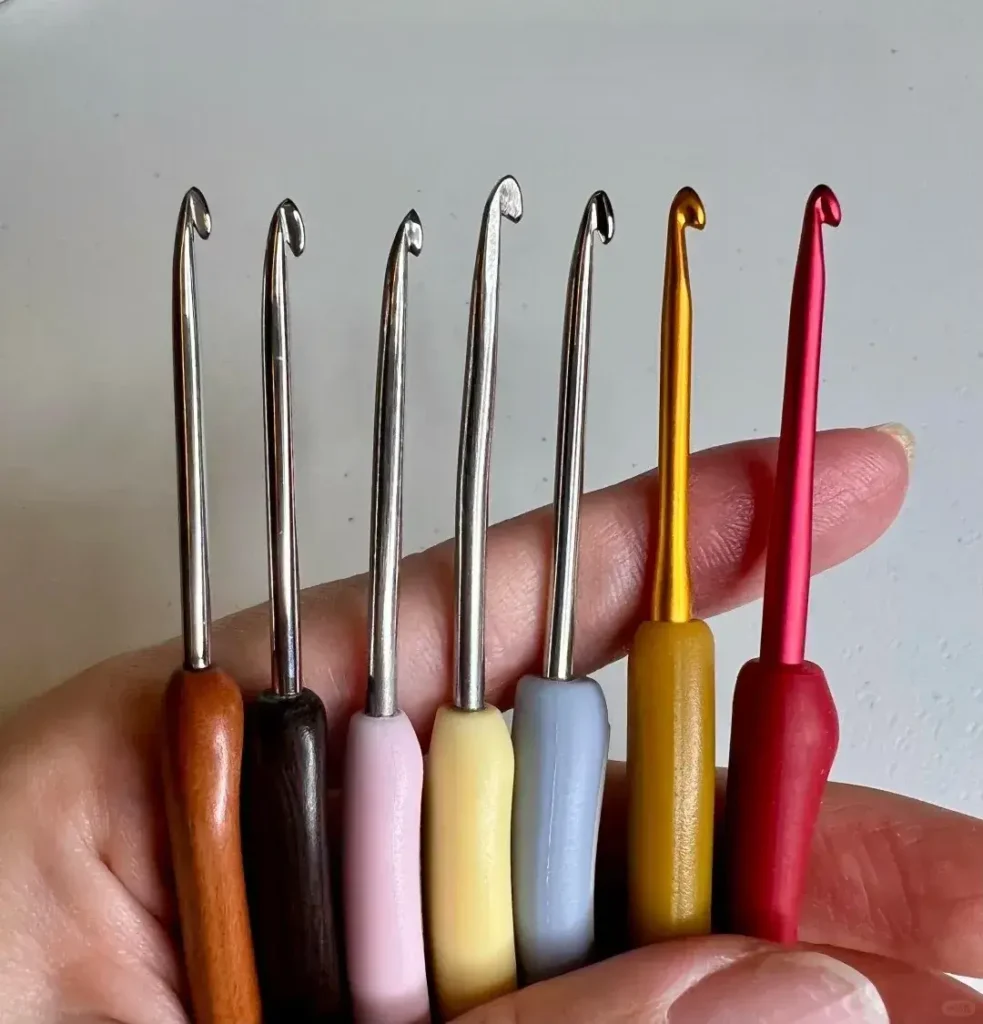
Plastic or resin hooks weren’t unusable, but they weren’t my favorite either. I noticed they slipped more easily in my hand, and after a longer session, my hand felt more strained.
They’re not “bad” hooks by any means — I just don’t reach for them first anymore.
Hook Feel — Cheap vs Expensive
This was something I didn’t understand until I felt the difference myself.
Cheaper hooks tend to have a slightly gritty or draggy feel. The yarn doesn’t glide as smoothly, which means you end up using more effort than you realize. It’s subtle, but over time, it adds up.
More expensive hooks feel noticeably smoother. The yarn slides easily, stitches form with less resistance, and everything feels calmer in your hands.
👉 That said, I don’t recommend beginners rush to buy expensive hooks.
If you’re just starting out, affordable hooks are more than enough. Once you’ve learned the basic stitches and finished one or two projects, then upgrading makes sense — and you’ll actually be able to feel and appreciate the difference.
The “Best” Hook Is the One That Lets You Finish Something
Crochet hooks aren’t status symbols, and hook sizes aren’t levels you have to “unlock.”
In the beginning, what matters most is being able to start, finish, and want to come back again.
If a 2.0 or 3.0 mm hook helps you finish your first small piece,
then that was the right hook. 🧶