Double Crochet is one of those stitches that shows up everywhere — scarves, blankets, hats, and so many everyday crochet projects rely on it. Once you learn it, a whole new range of patterns suddenly becomes possible.
If you’ve already learned how to make a foundation chain, this is the natural next step. Double crochet isn’t about speed or complexity — it’s about understanding height, rhythm, and how stitches start to open up your fabric.
If you’re not quite there yet, you can always start from the very beginning in my Start Here beginner guide.
In this tutorial, I’ll walk you through double crochet step by step, building directly on what you already know. There’s no rush here. This is about learning one of the most essential stitches at a pace that actually feels doable.
Double Crochet: Slow-Motion Video Tutorial
This video is shown in slow motion on purpose.
The goal here isn’t to memorize steps or keep count — it’s simply to see how the yarn moves. Watch how the yarn wraps over the hook, how it’s pulled through, and how the loops disappear two at a time. That’s what makes it different from single crochet, where loops are worked through all at once.
At this stage, you don’t need to pick up your hook yet. Just watch the rhythm:
yarn over → pull through → pull through two → pull through two.
Think of this as the understanding phase, not the practice phase. Once you can visually follow the path of the yarn, everything that comes next will feel much easier to recognize.
Follow-Along Practice: Double Crochet Step by Step
This is where you can start crocheting along with the video.
There’s no need to rush or worry about speed. The purpose of this section is to let your hands follow what you’ve just seen — slowly and intentionally.
Turning Chain: Why Double Crochet Usually Starts With ch 3
In most patterns, double crochet begins with a turning chain of three chains (ch 3).
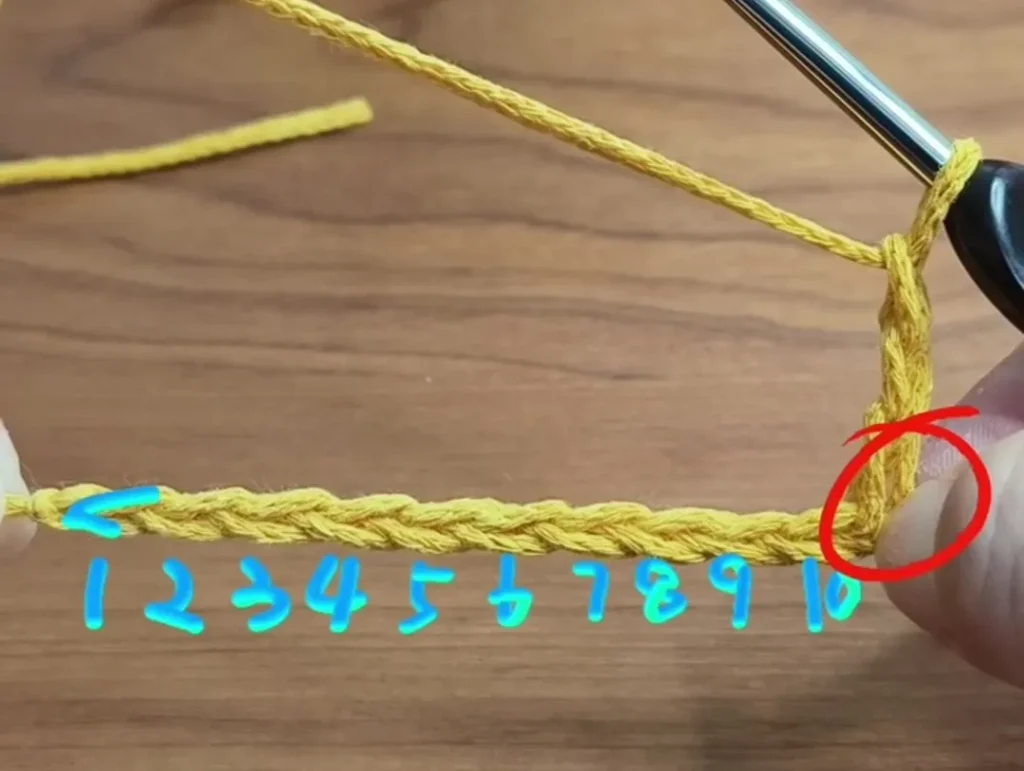
That chain isn’t decoration — it’s there to give the row the height it needs. Double crochet is taller than single or half double crochet, and the turning chain helps the fabric stay even when you turn your work.
You may see some tutorials count the ch 3 as a stitch. In this video, it does not count as one. After turning, you’ll insert your hook into the first actual stitch of the row.
That’s the standard used throughout this practice.
Practice Tips While You Crochet Along
As you crochet along, there are only two things to watch for:
- Keep your tension as even as you can from stitch to stitch.
- Avoid pulling too tight or leaving loops too loose.
If something starts to feel awkward or unclear, pause and replay the slow-motion section. You’re not trying to fix mistakes yet — you’re building feel and rhythm.
Take your time. This stage is about letting the movement settle into your hands.
Common Double Crochet Mistakes (And How to Spot Them)
Below are three issues I personally see (and hear) all the time when beginners start practicing double crochet. The good news? Most of them aren’t “skill problems” — they’re small habit problems, and they’re totally fixable once you know what you’re looking at.
1) “I can’t get the hook through… especially on that second loop.”
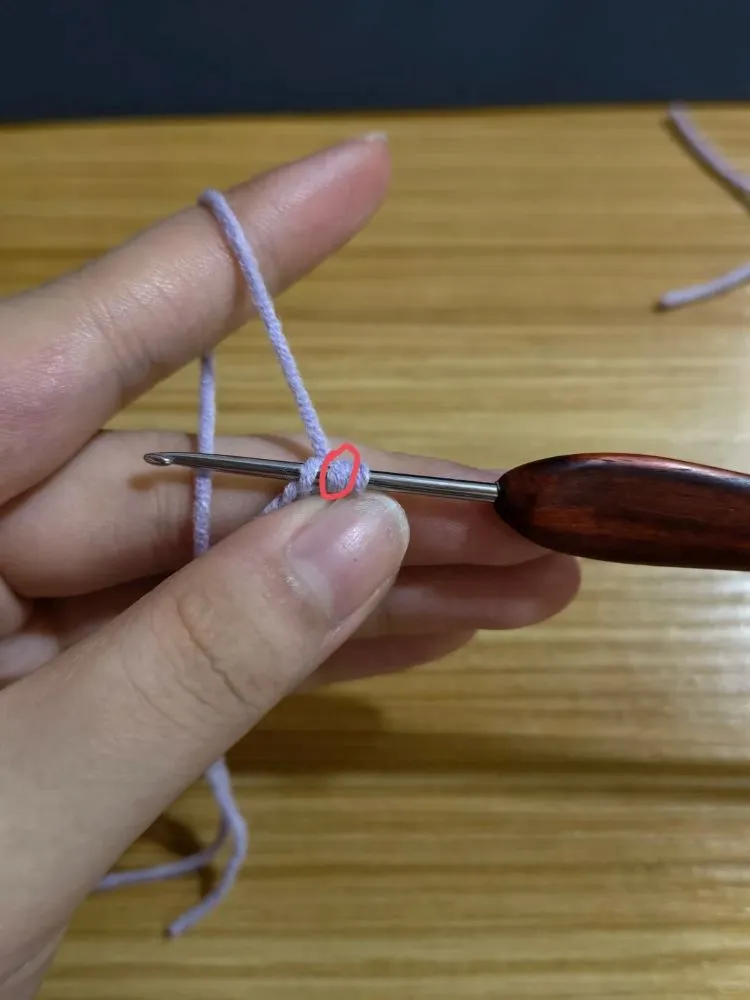
What it usually means: your tension is too tight.
If your hook keeps getting stuck — even when you’re following tutorials exactly — it’s almost never because you’re holding the hook “wrong.” It’s usually because your yarn is pulled so tight — often made worse by using the wrong hook size (see my crochet hooks for beginners guide).
What to try:
- Loosen your grip slightly (both on the yarn and the hook)
- Make your yarn overs a little more relaxed
- If you feel resistance, don’t force it — pause, reset your hands, and try again
A simple rule: if you have to fight your hook, you’re crocheting tighter than you need to.
2) “My double crochet is full of holes. Why is everything so open?”
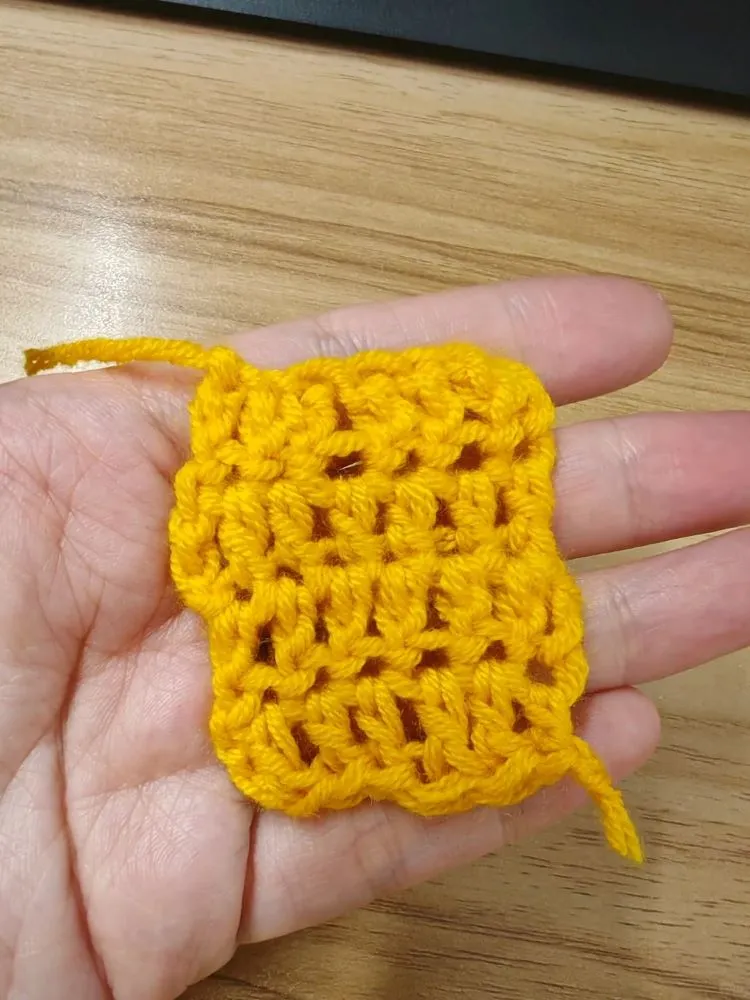
What it usually means: your hook is too big, your tension is too loose, or your first stitch placement is off.
Double crochet is naturally more “open” than single crochet — but it shouldn’t look like random gaps everywhere.
Quick checks:
- Hook size: If you’re using thin yarn, try a smaller hook — or switch to a beginner-friendly yarn (I list them in the best yarn for crochet beginners).
- Tension: If your loops look very tall and loose, focus on keeping your pull-throughs consistent.
- Turning chain placement (common beginner trap):
In many patterns, ch 3 counts as the first stitch. That means:- the first “gap” near the turning chain is normal
- you usually do not work into the very first spot right next to the turning chain
- your first real stitch often goes into the next V
If patterns start showing symbols instead of written steps, learning how to read crochet chart symbols will help a lot.
If your edges look strange even though your stitch count seems right, it’s often because the first stitch and last stitch are being placed incorrectly — and that can make the whole swatch look uneven.
What to try:
- Try one more row slowly, focusing only on where you place the first and last stitch
- Add a stitch marker to the first real stitch of the row so you don’t drift
3) “Why did my fabric turn out so wide and messy like this?”
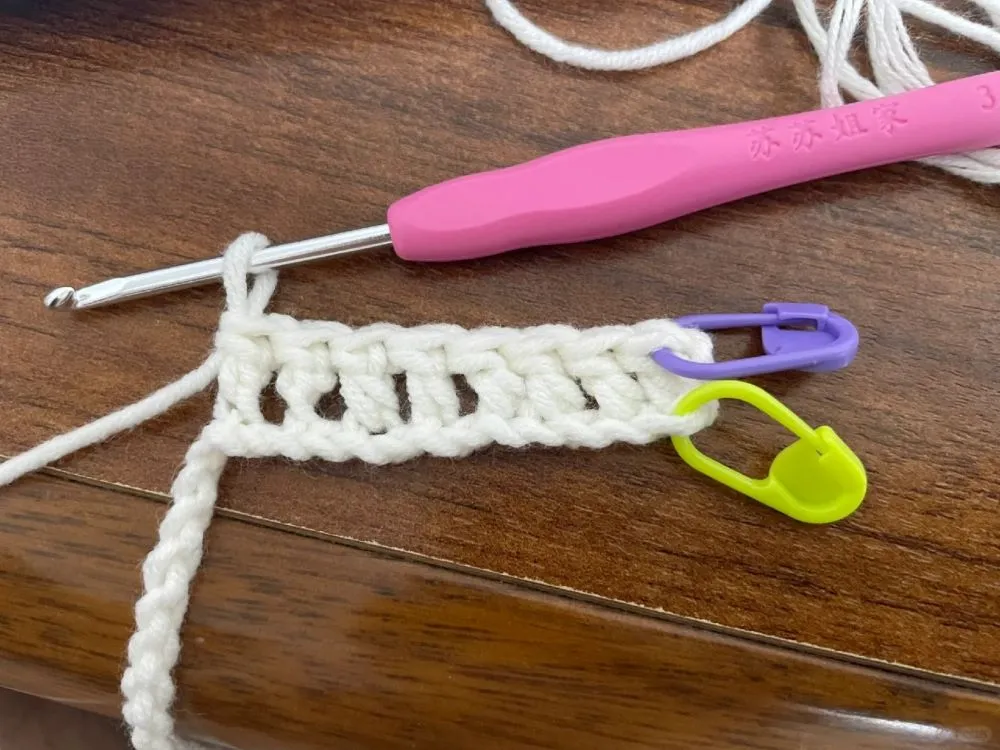
What it usually means: you accidentally skipped stitches.
If your double crochet looks “too open” in a messy way (not evenly spaced), it’s often because stitches aren’t sitting right next to each other anymore — there’s a missing stitch somewhere and the row is stretching to compensate.
How to spot it:
- Look for a section where the Vs suddenly get farther apart
- You may notice a “jump” where you inserted the hook into the wrong place
What to try:
- Slow down and crochet one stitch into every V, one-by-one
- Count as you go (not just at the end of the row)
- If you keep losing your place, use a stitch marker every 5–10 stitches until your eyes get used to the rhythm
What to Practice Next
Once double crochet starts to feel familiar, the goal isn’t to move on as fast as possible — it’s to let the stitch settle.
A few simple ways to practice are:
- small swatches
- a mini crochet scarf for beginners
- or double crochet rows inside a basic granny square
You don’t need to finish a big project. Even a few rows at a time are enough to build confidence and control.
You don’t need speed. You need consistency.
When this stitch begins to feel natural, it becomes much easier to explore patterns that use double crochet as a foundation — and that’s when a lot of crochet instructions suddenly start to make sense.