Single crochet is one of the most common — and most useful — stitches in crochet.
It creates a fabric that’s dense, slightly stretchy, and sturdy enough for things like coasters, amigurumi, and mini scarf where structure actually matters. If you’re brand new, start with my Start Here beginner path.
But despite being so basic, single crochet is also the stitch that makes beginners doubt themselves the most.
The fabric looks tight. The rows curve. The stitches don’t always look like the neat little “V” shapes you see in tutorials. And that’s usually the moment people start wondering if they’re doing something wrong.
Here’s the truth I wish someone had told me earlier:
most beginners aren’t doing it “wrong” — they just don’t know what normal looks like yet.
This article isn’t about learning more stitches. It’s about learning how to recognize what you’re seeing, so you can stop second-guessing your hands and start understanding your crochet. 🧶
Single Crochet Video Tutorial for Beginners
Before you start worrying about whether you’re doing it right, take a moment to just watch the video once.
You don’t need to understand every movement on the first pass. The goal of your first watch is simply to get a feel for the overall rhythm — how the hook moves, how the yarn flows, and how each stitch connects to the next.
When you watch it a second time, that’s when you can slow down and begin comparing it to your own hands. Pause the video. Look at where the hook goes in. Notice how the yarn is wrapped and pulled through. This back-and-forth between watching and crocheting is where things start to click.
This video works best as a reference, not something you have to copy perfectly in one go. Crochet isn’t about memorizing motions — it’s about training your eyes to recognize what’s happening as you work. If your foundation feels shaky, go back to chain stitch for beginners first — it makes single crochet much easier.
What to Pay Attention to in the Video (Beginner Tips)
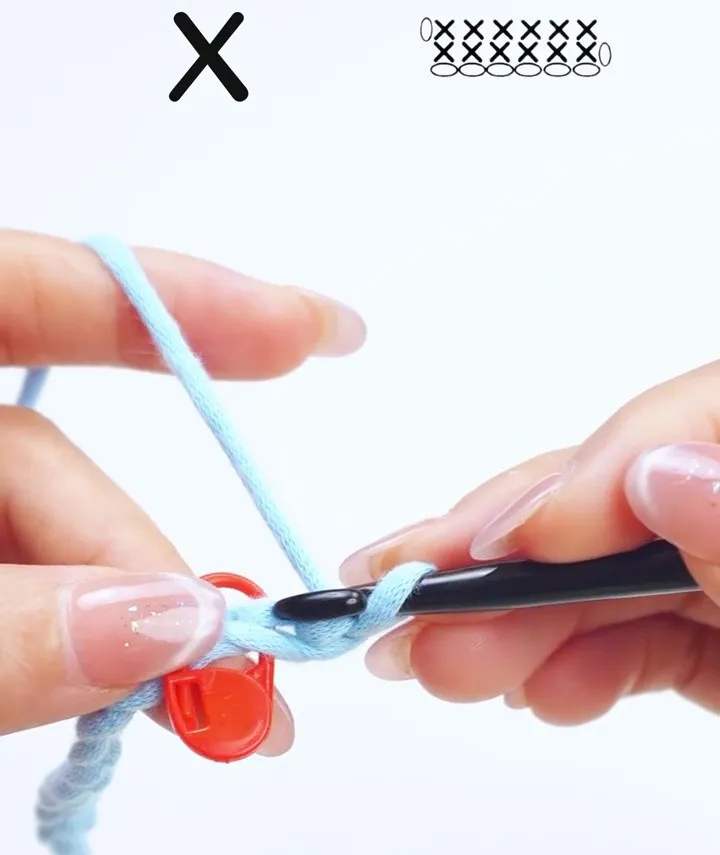
This is your first stitch of the row.
Make sure the hook goes into the stitch with the marker, not the space next to it. The marker shows you exactly where the first stitch should be.
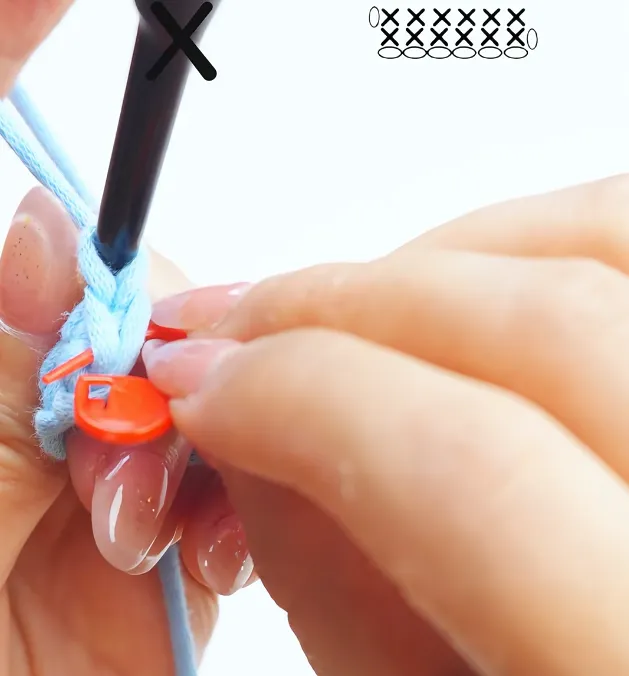
After completing the first stitch, move the stitch marker onto that stitch.
The loop on your hook does not count as a stitch — only completed stitches do.
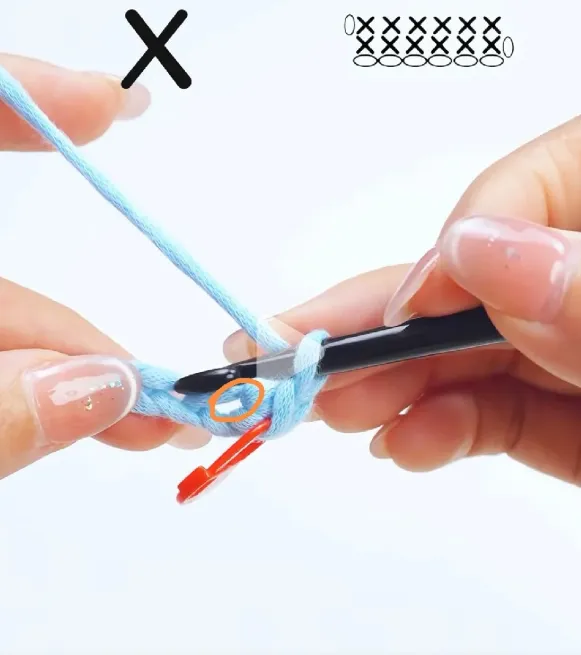
When you start working normally, do not insert the hook into the first hole again.
That stitch has already been worked. Insert into the next stitch to keep your stitch count correct.
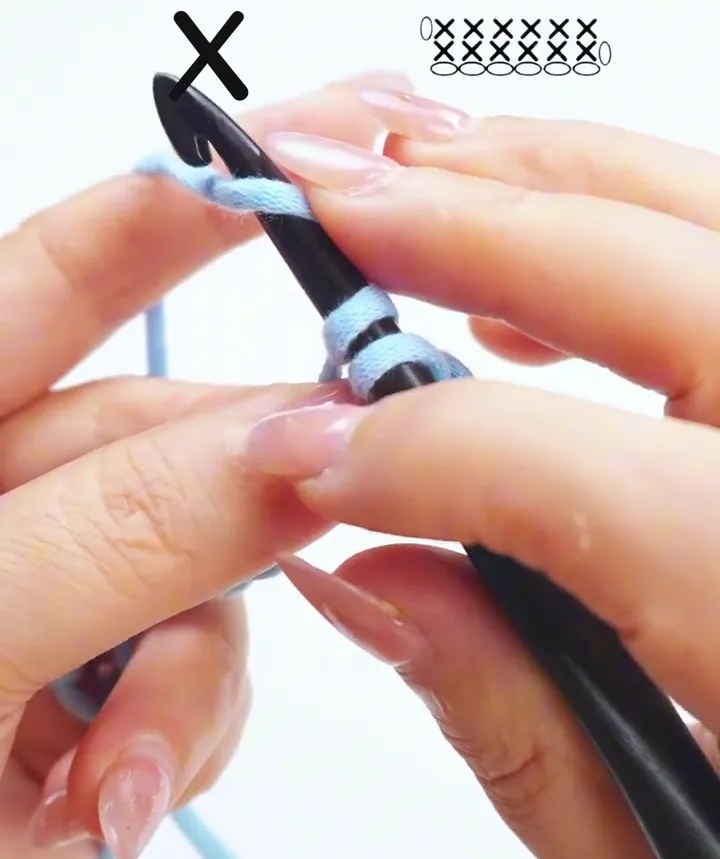
You can yarn over from above or from below — both are fine.
What matters is staying consistent. Switching directions mid-row can change how your fabric looks.
As you watch the video, you’ll notice a few things that might feel confusing at first — and that’s completely normal.
When it comes to yarn over, wrapping the yarn from over the hook or under the hook both work. There isn’t a “wrong” choice here. What matters is staying consistent. If you switch directions without realizing it, the texture of your fabric can start to look a bit odd, which often makes beginners think the stitch itself is wrong — when it’s really just a consistency issue. A comfortable hook helps you stay consistent — here’s my guide on crochet hooks for beginners.
You might also notice that single crochet fabric feels tighter than you expected. That’s normal. Single crochet isn’t meant to drape the way taller stitches do. It creates a firm, structured fabric, which is exactly why it’s used for things like bags, amigurumi, and sturdy accessories. If it feels tight no matter what you do, check your yarn first — here’s the best yarn for crochet beginners (the ones that don’t split).
And finally, if your first few rows curve or bend, don’t panic. This usually has nothing to do with doing the stitch incorrectly. Your hand tension is still settling in, and your hook angle is adjusting as you work. After a few more rows, the fabric naturally starts to straighten out.
Curving doesn’t mean failure — it means you’re still learning control.
Some Common Single Crochet Problems
Why does my single crochet have so many holes?
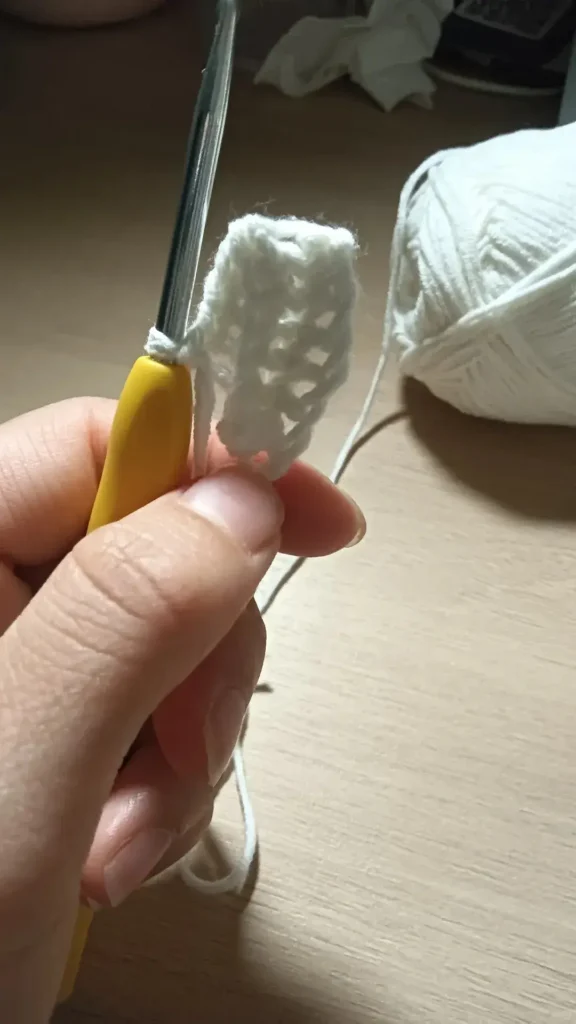
Most of the time, this happens when the hook is too large for the yarn.
It’s not a stitch problem — switching to a smaller hook usually fixes it right away.
Why are my 10 single crochet stitches curved? Is this normal?
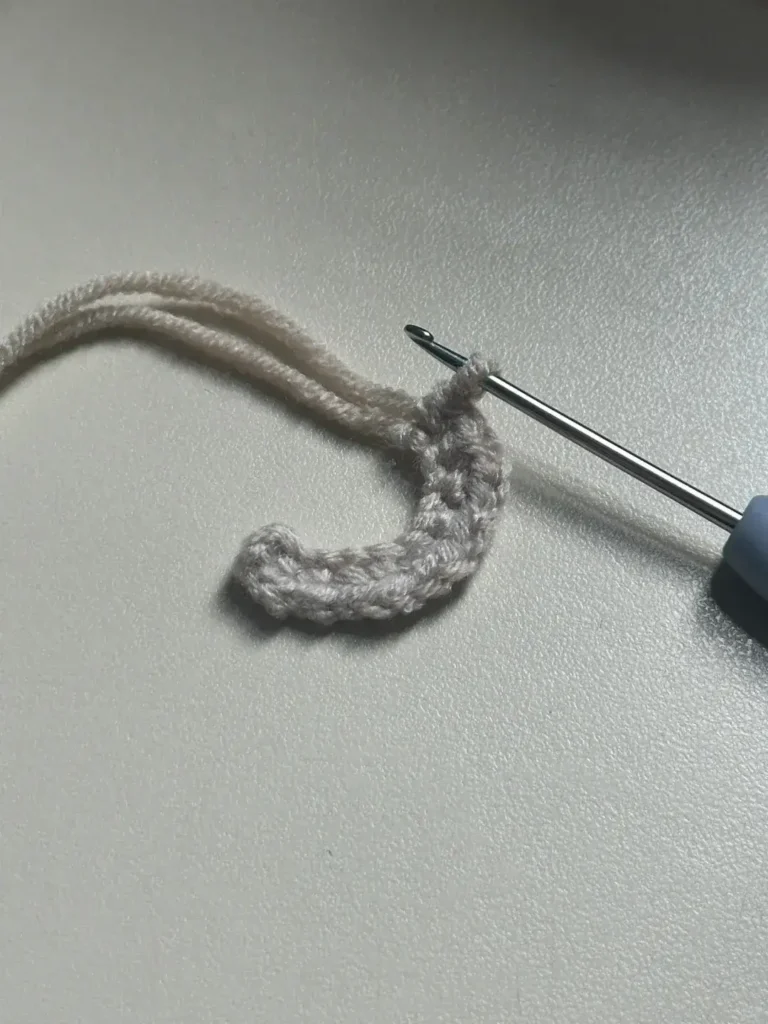
Yes, this is completely normal.
Beginner tension isn’t stable yet. Keep practicing, and remember: looser when pulling through, steadier as you finish the stitch.
Why am I losing stitches when I practice single crochet?
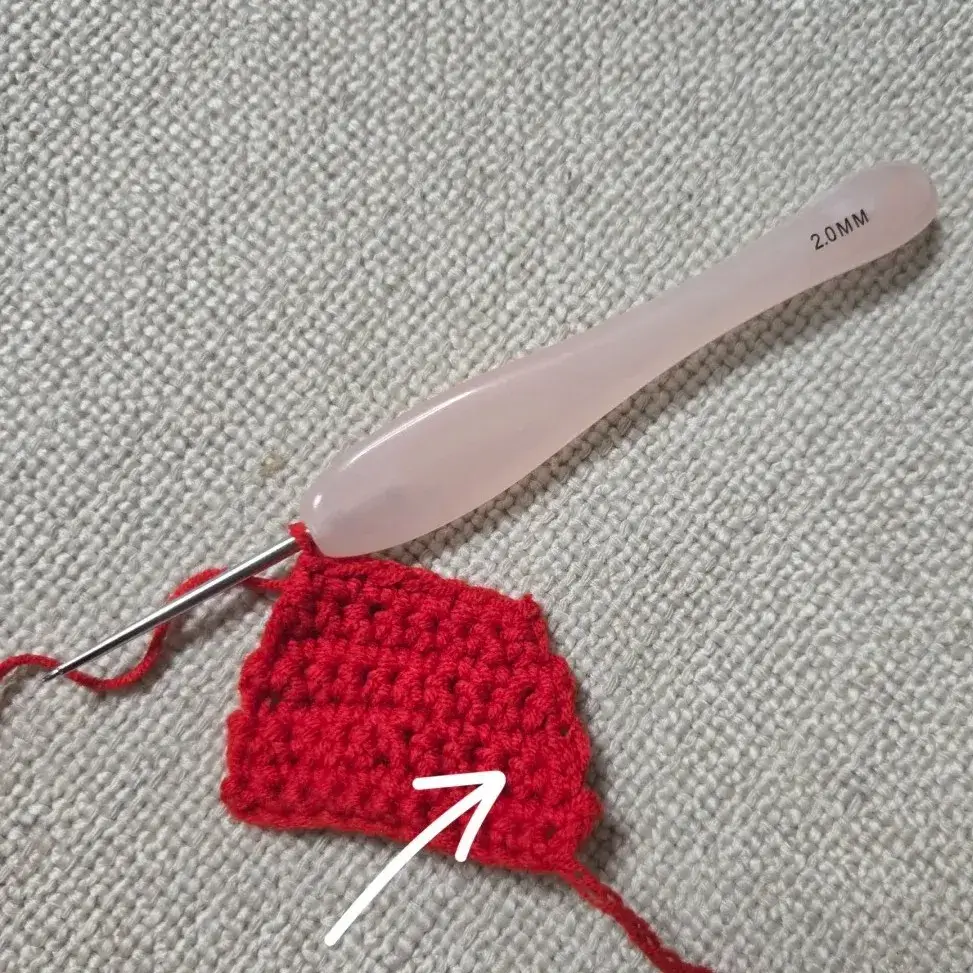
This usually means one stitch is missed in each row, often the first stitch.
Placing a stitch marker in the first stitch helps keep your stitch count correct.
What to Learn Next
Once you can read your own stitches and tell what’s normal from what actually needs fixing, you’ve done exactly what this lesson is meant to teach.
At this point, you don’t need a new stitch yet — you just need a little more time with this one.
Practice single crochet until the fabric feels familiar, your rows stop surprising you, and you no longer have to second-guess every stitch.
When that happens, double crochet is the natural next step.
You’ll notice it feels much easier than you expect, because the control you built here carries over.
Take your time. Mastery doesn’t come from rushing forward — it comes from understanding what your hands are already doing.