
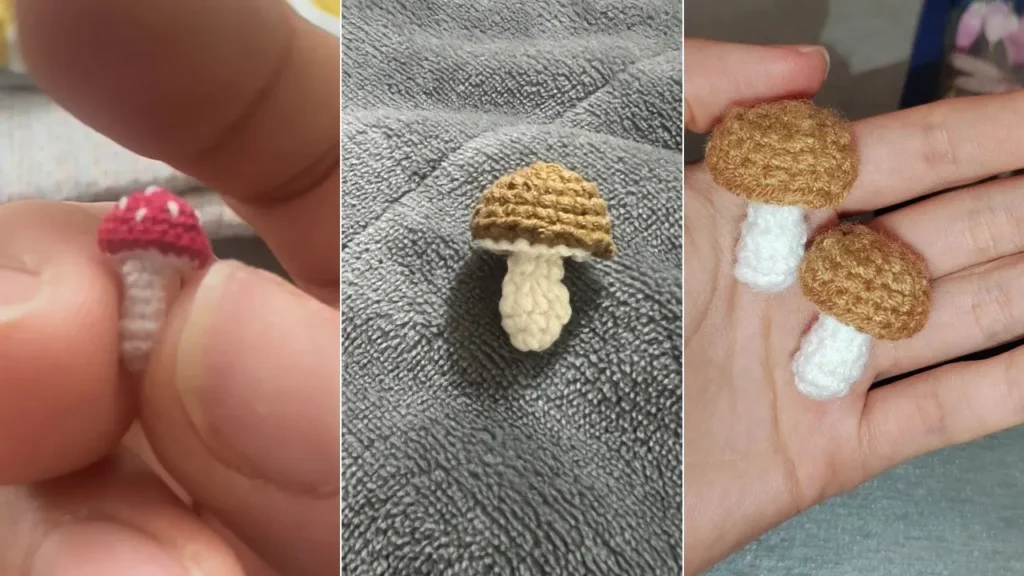
Sometimes the smallest crochet projects are the most satisfying. This tiny crochet mushroom is one of those quick little projects that starts looking cute very quickly, even if you’re still new to crochet.
I made this pattern using simple stitches and a small amount of cotton yarn, so it works really well as a relaxing practice project. If you’re still getting comfortable with working from a magic ring, shaping with increases and decreases, or sewing small pieces together, this is a lovely one to try.
You can follow the written pattern below, or crochet along with my video if that feels easier.
Watch the Video First
If you like seeing each round as you go, this video will make the pattern much easier to follow.
Why This Tiny Crochet Mushroom Is Great for Beginners
I think this is a really nice beginner project because it stays simple in the best way.
It’s small, quick to finish, and doesn’t use much yarn, so it never feels too overwhelming. At the same time, it still lets you practice a few important basics like the magic ring, single crochet, increases, and decreases.
I also like that it helps beginners get used to making a simple 3D shape without turning into a big or stressful project. It’s the kind of little project that feels fun to make and really satisfying to finish.
Materials
Here’s what I used for this tiny crochet mushroom:
- 2.0 mm crochet hook
- 4-ply cotton yarn in two colors
- one color for the mushroom cap
- one color for the stem
- Fiberfill
- Stitch marker
- Yarn needle
- Scissors
I used 4-ply cotton yarn for this project. It gives the mushroom a neat, firm shape and works well with a 2.0 mm hook.
Crochet Abbreviations
Here are the crochet abbreviations used in this pattern:
- MR = magic ring
- sc = single crochet
- inc = increase
- dec = decrease
- FO = fasten off
- st(s) = stitch(es)
Pattern Notes
A few helpful notes before you start:
- This pattern is worked in continuous rounds.
- Use a stitch marker to mark the first stitch of each round.
- Stuff the stem lightly before assembly.
- Leave a long tail on the cap for sewing.
Free Crochet Mushroom Pattern
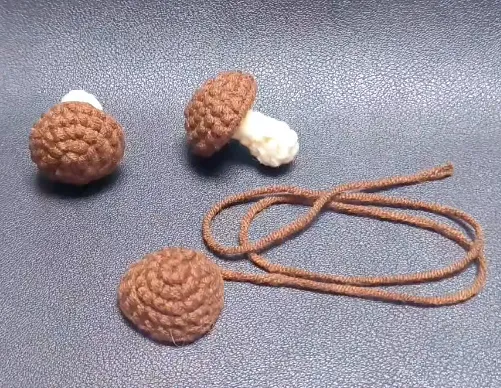
Mushroom Cap
Round 1: 6 sc in MR (6)
Round 2: inc in each stitch around (12)
Round 3: [1 sc, inc] x 6 (18)
Rounds 4–5: sc in each stitch around (18)
Fasten off and leave a long tail for sewing.
Mushroom Stem
Round 1: 6 sc in MR (6)
Round 2: [1 sc, inc] x 3 (9)
Round 3: sc in each stitch around (9)
Round 4: [1 sc, dec] x 3 (6)
Rounds 5–7: sc in each stitch around (6)
Round 8: inc in each stitch around (12)
Round 9: [1 sc, inc] x 6 (18)
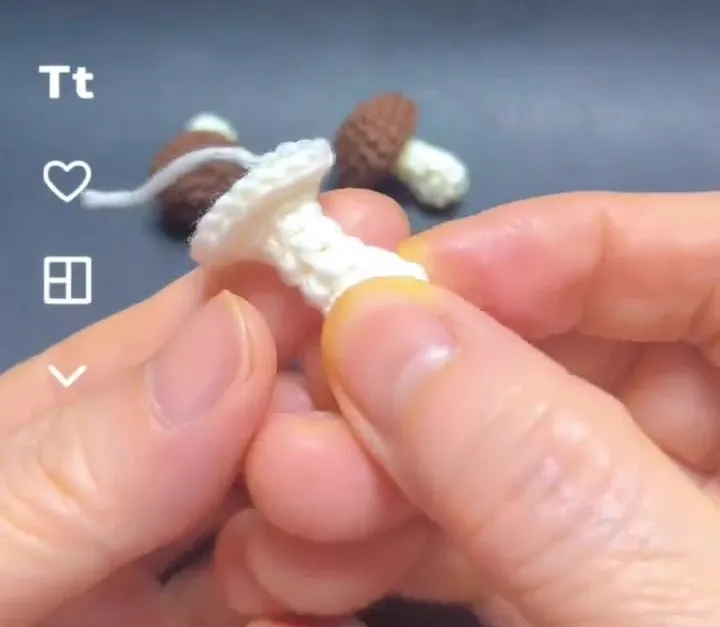
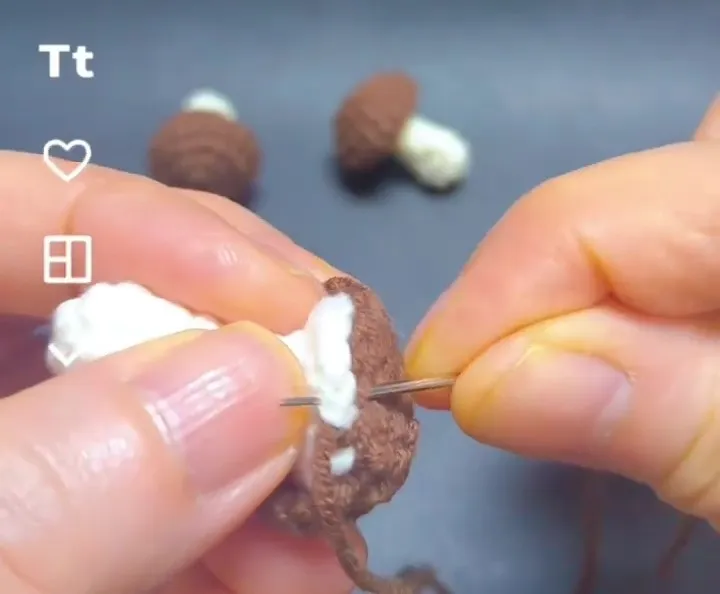
Sew the stem to the cap. If you want to see the placement more clearly, I show that part in the video above.
Beginner Q&A
Why does such a tiny project feel so hard to crochet?
This usually happens because your stitches are a little too tight. When the piece is very small, tight stitches can make it hard to insert the hook and pull it back out, and that can make your fingers feel sore too.
Try relaxing your tension just a little. Small crochet pieces do get easier with practice, and once your hands get more used to the motion, they won’t feel nearly as frustrating.
What does “increase” mean in single crochet?
In single crochet, an increase means working 2 single crochets into the same stitch.
That’s how the piece gets wider and starts to form its shape.
What to Try Next
If you enjoyed making this tiny crochet mushroom, you might like trying another small project next. I always think these little pieces are a nice way to keep practicing without feeling overwhelmed.
Here are a few beginner-friendly projects you can try next:
- Crochet Fish Pattern – a cute tiny project that’s fun for practicing simple shaping
- Mini Crochet Pouch for Yarn Scraps – a useful little project that’s perfect for leftover yarn
- Mini Crochet Strawberry Keychain – a sweet small make for more practice with simple amigurumi shapes
- Crochet Mini Apple – another tiny fruit project that stays simple and beginner-friendly
If you’re still learning, little projects like these are a lovely way to keep practicing without feeling overwhelmed.